Research Access Scholars Program
A 10-week fully funded fellowship for high-achieving students from low-income households, combining mentored neuroscience research, conference preparation, and academic, college, and medical school admissions support.
A Pathway to Research Access.
The Research Access Scholars Program was established to expand access to meaningful research experiences for academically talented students from low-income backgrounds. Through a structured 10-week fellowship, selected scholars work alongside research mentors, develop academic research skills, prepare conference submissions, and receive additional academic, college, and medical school admissions guidance. RASP aims to reduce the financial barriers that prevent talented students from accessing research opportunities and the academic resources necessary to pursue their educational goals.


What Scholars Receive
Mentored Research
Work with experienced research mentors on structured neuroscience research projects. Develop skills in literature review, research methodology, data analysis, academic writing, and communication.
Conference Support
Receive guidance in preparing research abstracts, scientific posters, and conference submissions. Learn how to communicate research findings and prepare for academic presentations.
SAT/ACT/MCAT Preparation
High school scholars receive pro bono SAT/ACT test preparation, and undergraduate scholars receive pro bono MCAT preparation, alongside their mentored research and academic guidance.
College Admissions Guidance
High school scholars receive pro bono college admissions essay support, and undergraduate scholars receive pro bono medical school admissions support, alongside their mentored research.
Inside the Neuroscience Research Curriculum
RASP follows the same curriculum as the Neuroscience Research Internship Program (NRIP), at a slower pace. Scholars complete a research abstract and poster, but do not complete the oral defense or participate in the symposium with Harvard, Stanford, and USC judges.
Phase 1: R Programming Foundations
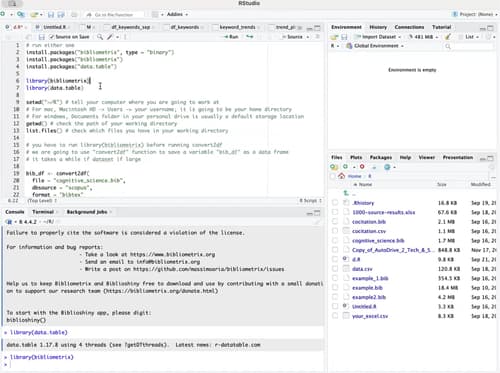
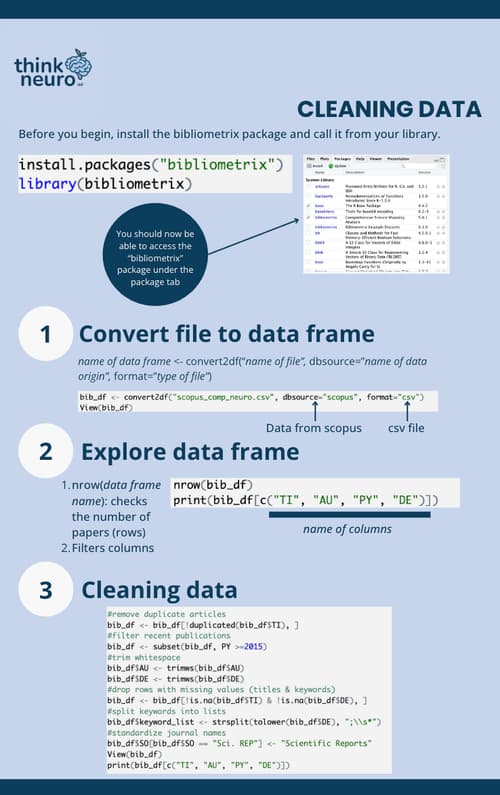
Interns begin by building technical fluency in R, one of the most widely used programming languages in research and data science. Through guided curriculum modules created by software engineers and taught by our technical staff, students learn to:
- Set up their R environment
- Clean and organize data
- Run bibliometric commands
- Create basic visualizations (e.g., word clouds, co-authorship networks)
No prior coding experience is required, as this phase is designed to be beginner-friendly yet rigorous!
Phase 2: Bibliometric Analysis & Data Visualization
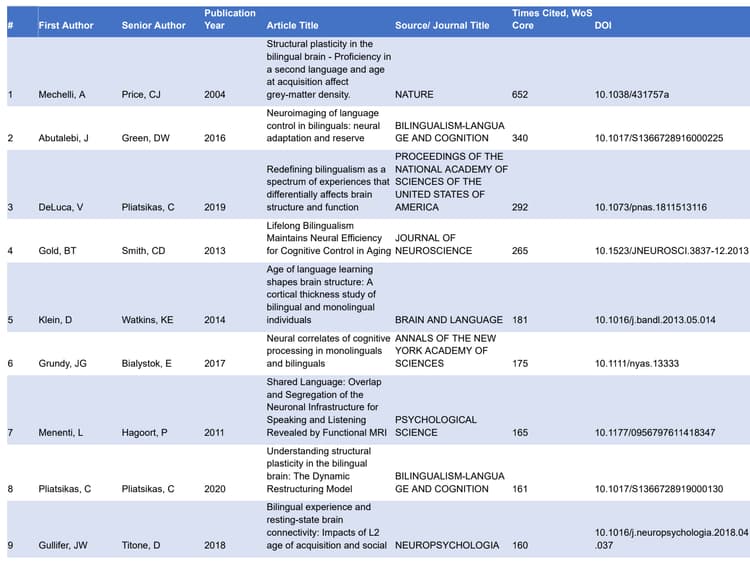
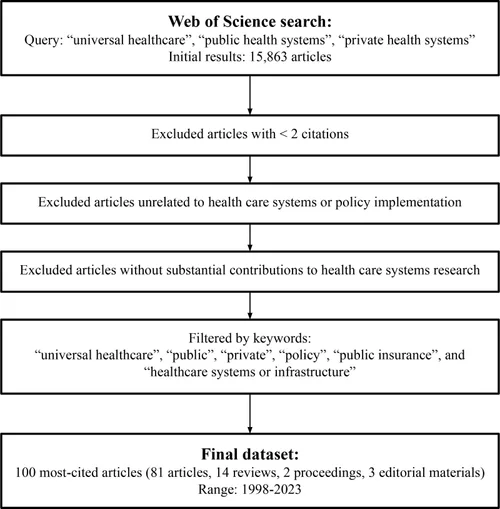
Next, interns move into the core analysis phase, where they extract real citation and authorship data from Web of Science (WoS) exports and organize it using Microsoft Excel and R. They will:
- Perform keyword and citation analysis
- Identify research trends and gaps
- Create publication graphs, topic maps, and collaboration networks
- Learn to interpret and refine bibliometric figures
This phase emphasizes bibliometric computation and modeling, transforming raw citation data into structured datasets and visual analytics.
Phase 3: Research Communication & Presentation
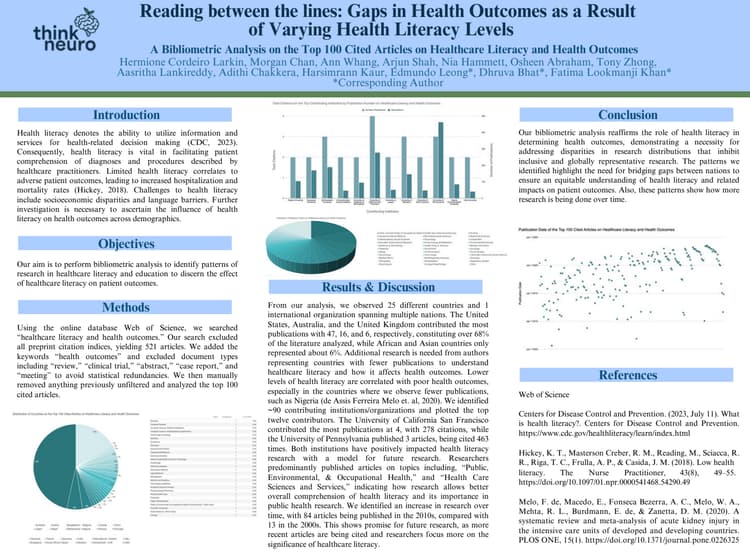
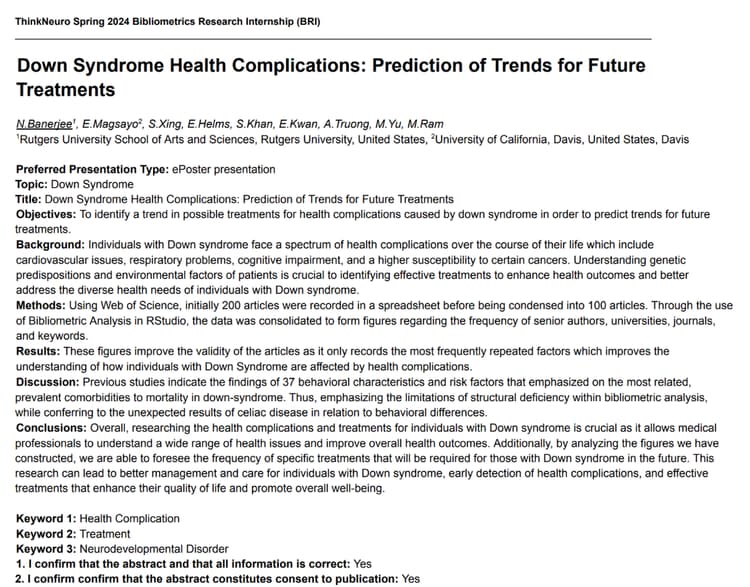
In the final phase, interns translate their analysis into professional research deliverables, including a graduate-level abstract and a research poster formatted for academic conferences. Interns receive mentorship on design and on how to effectively communicate complex ideas to diverse audiences, preparing them for real-world academic and professional settings.
- Learn to submit their posters to external, Ivy League hosted conference venues, where accepted students receive scholarships covering travel and conference fees.
- Translated into stronger college and graduate school applications.
From ThinkNeuro to QuestBridge Match & Full College Scholarship

Zoey Salej
Yale University, Class of 2030

Nahaar Mirza
Caltech, Class of 2030

Makenzy Jordan
Vanderbilt University, Class of 2030
Who Is the Research Access Scholars Program For?
RASP is designed for academically exceptional students who demonstrate significant financial need.
Ideal applicants:
- Are currently enrolled in high school or an undergraduate institution.
- Have a high GPA and have challenged themselves with the most rigorous courses available to them.
- Optionally submit standardized test scores (SAT, ACT, or AP) though highly recommended.
- Have a genuine interest in neuroscience, medicine, biomedical sciences, or related research fields.
- Come from low-income households.
- Would otherwise face significant financial barriers to participating in a paid research program.
- Demonstrate intellectual curiosity, motivation, and commitment.
Financial Eligibility
The fellowship is exclusively intended for students from low-income households. Applicants must meet at least 1 of the following 3 requirements:
- Household income below $50,000 a year in 2025/2026.
- High school student who received an SAT/ACT fee waiver.
- Undergraduate student who received the federal Pell Grant in 2026.
Applicants should be prepared to provide applicable information from College Board or their respective universities or W2 documentation supporting their household's financial circumstances.
A Selective Fellowship for Exceptional Students.
Admission to RASP is highly competitive, with roughly 20 scholars selected per cohort. ThinkNeuro evaluates applicants holistically based on:
Academic Excellence
Strong grades in the most rigorous courses available to you. SAT, ACT, or AP scores are optional but highly recommended.
Demonstrated Financial Need
RASP is for students from low-income households who meet at least 1 of the 3 requirements. Documentation will be requested upon admission.
Extracurricular Activities
Depth matters more than the number of activities. Work and family responsibilities count as much as any other activity.
Intellectual Vitality
Curiosity beyond the classroom, through reading, projects, competitions, or research, and how you would contribute to the cohort.
How to Apply
- 1
Submit an Application
Provide academic background, research interests, and relevant extracurricular experiences.
- 2
Academic Evaluation
Applications are reviewed for academic achievement, research potential, and motivation.
- 3
Financial Need Verification
Selected applicants may be asked to provide documentation of financial circumstances.
- 4
Fellowship Decisions
Final scholars are selected based on academic qualifications and demonstrated financial need.
- 5
Fellowship Enrollment
Admitted scholars receive information about their fully funded placement and program onboarding.
Frequently Asked Questions
How is RASP different from the Neuroscience Research Internship Program?
RASP follows the same curriculum as the NRIP at a slower pace. Scholars complete a research abstract and poster, but do not complete the oral defense or participate in the symposium with Harvard, Stanford, and USC judges.
Is the Research Access Scholars Program free?
Yes. Selected scholars receive fully funded participation in the 10-week fellowship.
Who is eligible to apply?
High-achieving high school and undergraduate students who meet at least 1 of the 3 financial requirements: a household income below $50,000 a year in 2025/2026, an SAT/ACT fee waiver (high school students), or a federal Pell Grant in 2026 (undergraduates).
Can students from middle- or high-income households apply?
No, RASP is specifically designed for students who face significant financial barriers to accessing research opportunities. It is not intended as a general scholarship or tuition reduction on the Neuroscience Research Internship Program.
Do I need prior research experience?
Prior research experience is not required. Academic potential, curiosity, and motivation are important considerations.
Does the program guarantee conference acceptance?
No. Scholars receive conference preparation and submission support, but conference acceptance decisions are made independently by conference organizers and venues.
Do scholars receive test prep and admissions support?
Yes. Alongside the mentored research, high school scholars receive pro bono SAT/ACT test preparation and college admissions essay support, and undergraduate scholars receive pro bono MCAT preparation and medical school admissions support.
Begin your research journey.
The Research Access Scholars Program provides academically exceptional students from low-income households with mentored research through a fully funded 10-week fellowship.
Rolling admissions. Limited fellowship positions available.